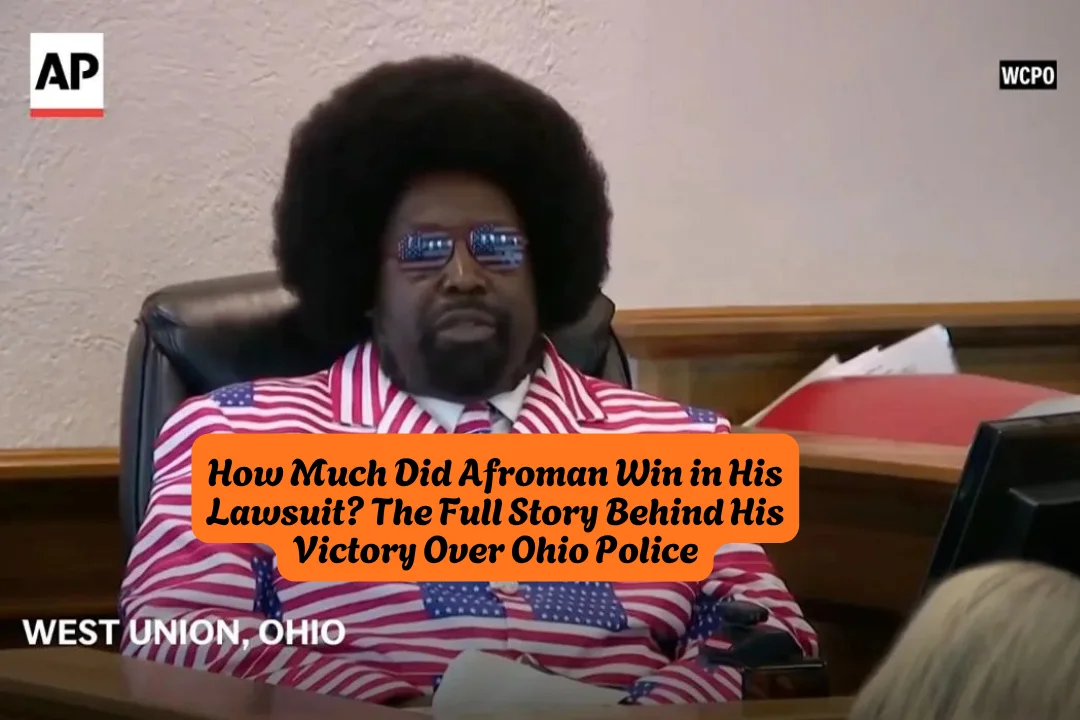
Afroman Lawsuit: A Landmark First Amendment Triumph
The recent verdict in the Afroman lawsuit has resonated far beyond the courtroom walls, cementing its place as a significant victory for free speech in the United States. While the sensational claims against him tallied nearly $3.9 million, rapper Joseph Foreman, better known as Afroman, did not receive a financial windfall. Instead, the Adams County jury delivered something arguably more profound: a complete legal vindication of his First Amendment right to mock, criticize, and satirize public officials, specifically the police officers involved in a contentious raid on his Ohio home. This decision underscores the vital role of artistic expression and commentary in holding power accountable, making the **Afroman Lawsuit Verdict** a pivotal moment for civil liberties.
The Genesis of the Conflict: A Raided Home, A Broken Door
The saga began in August 2022, when law enforcement officials executed a search warrant at Afroman’s Ohio residence. The raid was reportedly part of an investigation into alleged drug and kidnapping offenses. However, a crucial detail emerged: no charges were ever filed against Afroman or anyone else following the extensive search. What remained was a household in disarray and a family deeply affected. Afroman testified that the incident traumatized his young children, then aged 10 and 12, and left significant property damage, including a broken front gate and door. He vehemently stated, “The whole raid was a mistake. All of this is their fault. If they hadn’t have wrongly raided my house, there would be no lawsuit. I would not know their names.” The initial raid, in his view, was an egregious overreach, and his subsequent actions stemmed directly from this perceived injustice, setting the stage for a unique form of protest.
Satire as a Shield: Afroman's Musical Response
Rather than filing a conventional complaint with a civilian oversight board or initiating a civil suit for damages immediately, Afroman chose a different, distinctly artistic path. He leveraged footage captured by his home security cameras – which documented the officers’ entry and search of his property – to create a series of viral satirical music videos. Tracks like
Lemon Pound Cake and
Will You Help Me Repair My Door? quickly racked up millions of views, transforming a private grievance into a public spectacle and a potent form of social commentary. In *Will You Help Me Repair My Door?*, Afroman directly questioned the officers, rapping lines such as “Did you find what you were looking for?” and “Would you like a slice of lemon pound cake / You can take as much as you want to take / There must be a big mistake.” Other videos went further, labeling the officers “crooked cops” and raising allegations of $400 missing during the raid, asserting, “Police officers shouldn’t be stealing civilians’ money.” This creative, unvarnished response quickly propelled Afroman’s story into the national spotlight, forcing a conversation about police conduct through the lens of humor and critique. For a deeper dive into how this footage became a legal battleground, read
From Raid Footage to Freedom: Afroman's Legal Battle Explained.
The Deputies' Grievances: Defamation, Privacy, and Public Scrutiny
Afroman’s musical response, however, was not without its legal repercussions. Seven Adams County sheriff’s deputies, whose likenesses appeared in the viral videos, collectively filed a lawsuit against him. Their claims were extensive, seeking nearly $3.9 million in damages for:
- Defamation: Alleging that Afroman’s videos damaged their reputations by portraying them negatively.
- Invasion of Privacy: Claiming unauthorized use of their images and personal information.
- Unauthorized Use of Likeness: Citing the use of their images in music videos and associated merchandise for commercial gain.
Individual claims highlighted the depth of their perceived harm. Deputy Lisa Phillips sought the highest amount at $1.5 million, while Deputies Brian Newland and Randy Walters each pursued $1 million. The deputies testified to feeling personally ridiculed and shamed. Deputy Lisa Phillips stated that one video questioned her gender and sexuality, while Sgt. Randy Walters tearfully recounted his child being hazed at school due to Afroman’s posts. Walters posed a poignant question in court: “Where in the world is it OK to make something up for fun that’s damaging to others when you know for sure it’s an absolute lie?” These powerful testimonies underscored the personal toll the public exposure took on the officers and their families, highlighting the delicate balance between free expression and individual reputation.
The First Amendment on Trial: Afroman's Vindication
Afroman's defense rested squarely and entirely on the First Amendment of the U.S. Constitution, which protects freedom of speech. His legal team consistently argued that his music and videos constituted artistic expression and legitimate social commentary, not factual assertions intended to be taken literally. Defense lawyer David Osborne powerfully articulated this stance in closing arguments, suggesting that no reasonable audience would interpret the satirical videos as literal truth or expect a public servant, particularly a police officer, to be immune from public criticism and mockery.
The jury’s decision to side with Afroman represented a monumental victory for these First Amendment principles. The **Afroman Lawsuit Verdict** did not result in a financial payout for the artist; rather, it delivered something far more significant: a resounding legal vindication of his constitutional right to use satire and artistic expression to criticize and even ridicule law enforcement officials. Outside the courthouse, an emotional Afroman declared, “We did it, America! Yeah, we did it! Freedom of speech! Right on! Right on!” He further emphasized, "I didn't win — America won," encapsulating the broader constitutional impact of the ruling. This verdict reaffirms that public figures, including police officers, operate under a different standard when it comes to defamation claims, acknowledging the critical role of robust public discourse and even humor in a democratic society. To understand the specifics of why Afroman received no money despite his win, check out
Afroman's $0 Payout Win: Unpacking the Ohio Verdict.
Beyond the Headlines: Implications of the Afroman Lawsuit Verdict
The **Afroman Lawsuit Verdict** carries profound implications, extending far beyond the immediate parties involved:
- Strengthening Free Speech Against Public Officials: The ruling reinforces the high bar for public officials seeking to win defamation lawsuits. It underscores that critical, even harsh or satirical, commentary on those in power is broadly protected by the First Amendment. This is vital for maintaining checks and balances in a democracy.
- The Power of Satire and Artistic Expression: Afroman's case highlights satire as a legitimate and powerful tool for social commentary and accountability. It affirms that artists can use their craft to process personal experiences and critique societal issues, even when the subject matter is controversial or directly involves law enforcement.
- Citizen Oversight in the Digital Age: The use of home surveillance footage played a crucial role. This case validates the growing trend of citizens using personal recording devices to document interactions with authorities, offering a form of grassroots accountability that can then be disseminated widely through digital platforms.
- Implications for Content Creators: While a victory for Afroman, creators should still understand the distinction between factual reporting and satire. This case was unique because Afroman’s defense successfully argued his work was clearly understood as satire. However, presenting unverified claims as fact could still lead to legal challenges.
- Encouraging Dialogue on Police Accountability: By allowing Afroman’s content to stand, the verdict inadvertently fosters more public discussion about police conduct, the appropriate use of force, and the rights of individuals during raids. This ongoing dialogue is essential for fostering trust and improving community-police relations.
This landmark decision serves as a powerful reminder that robust public discourse, even through unconventional and satirical means, is a cornerstone of American liberty. It champions the right of individuals to challenge authority and use their platforms to voice dissent, contributing to a more transparent and accountable society.
Conclusion
The Afroman lawsuit, culminating in its recent verdict, represents a truly landmark moment for First Amendment rights in the United States. While Afroman did not receive a financial settlement, his victory in court was arguably far more significant: a resounding affirmation of his constitutional right to free speech, particularly when it involves critiquing and satirizing law enforcement. This case underscores the enduring power of artistic expression as a tool for social commentary and accountability, setting a crucial precedent for how public officials can be scrutinized in the digital age. The **Afroman Lawsuit Verdict** is not merely a win for a musician, but a triumph for every American who believes in the fundamental right to speak truth, even if it’s through the lens of humor, to power.