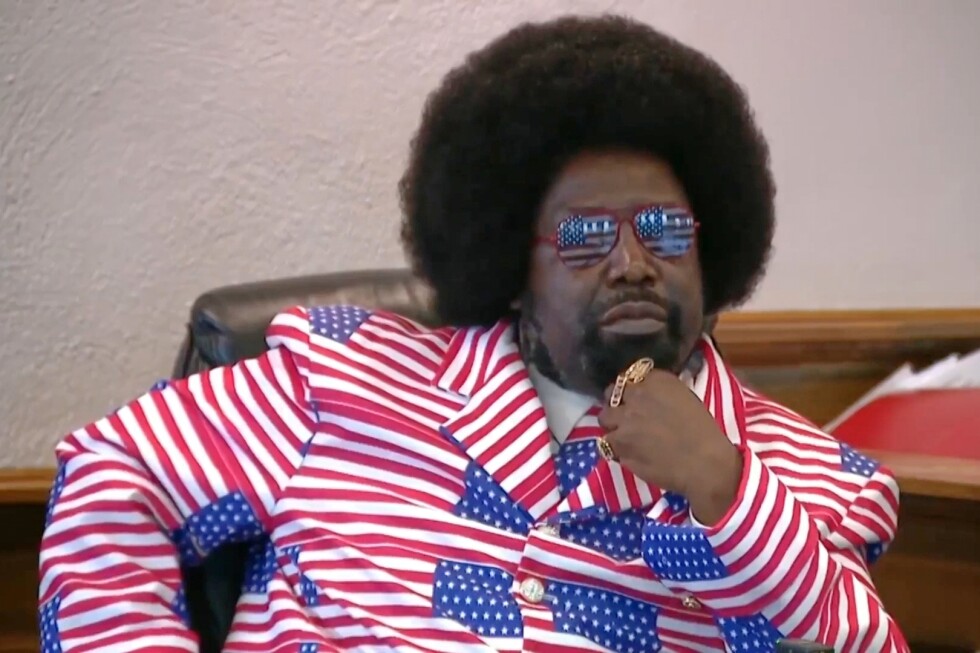
From Raid Footage to Freedom: Afroman's Legal Battle Explained
The world watched as Joseph Foreman, better known as the Grammy-nominated rapper Afroman, found himself entangled in a legal saga that transcended music and touched the very core of First Amendment rights. What began with a police raid on his Ohio home culminated in a landmark
Afroman Lawsuit: A Landmark First Amendment Triumph. While the headlines might have focused on a staggering $3.9 million figure, the true victory for Afroman, as confirmed by the jury's decision, was far more profound than any monetary sum. This wasn't about a payout; it was about the legal vindication of an artist's right to use satire and criticism against perceived injustice.
The Raid That Sparked a Rhythmic Rebellion
The chain of events that led to the high-profile legal battle began in August 2022. Local law enforcement, acting on a search warrant related to an investigation into alleged drug trafficking and kidnapping, entered Afroman's Adams County home. What followed was an experience that Afroman would later describe as deeply traumatizing for his young children, then aged 10 and 12. Beyond the emotional distress, the raid reportedly resulted in significant property damage, including a broken front gate and door.
Crucially, despite the extensive search, no charges were ever filed against Afroman or anyone else following the incident. "The whole raid was a mistake. All of this is their fault. If they hadn’t have wrongly raided my house, there would be no lawsuit. I would not know their names,” Afroman later testified, articulating a sentiment of profound injustice that would fuel his unique response.
Crafting Commentary: How Footage Became Viral Folk Art
Instead of filing a traditional complaint with a civilian oversight board, Afroman chose a path that was authentically his own: music. His home security cameras had captured the entire raid, documenting officers entering and searching his property. This raw, unfiltered footage became the canvas for a series of viral satirical music videos, including the widely popular
Lemon Pound Cake and
Will You Help Me Repair My Door?
These videos, which quickly garnered millions of views across social media platforms, were more than just entertainment; they were a direct and biting critique of the raid. In
Will You Help Me Repair My Door?, Afroman directly addressed the officers, rapping, “Did you find what you were looking for?” and “Would you like a slice of lemon pound cake / You can take as much as you want to take / There must be a big mistake.” Other videos went further, labeling the officers as “crooked cops” and pointing to $400 that allegedly went missing during the raid – a claim Afroman reiterated in his testimony: “Police officers shouldn’t be stealing civilians’ money.” His artistic expression became a powerful form of social commentary, transforming a personal grievance into a public discussion.
The Deputies' Retort: A $3.9 Million Challenge to Satire
Afroman’s viral videos, while celebrated by many as a clever form of protest, did not sit well with the subjects of his satire. Seven Adams County sheriff’s deputies subsequently filed a lawsuit against Afroman, collectively seeking nearly $3.9 million in damages. Their claims were comprehensive, citing defamation, invasion of privacy, and unauthorized use of their likenesses in his music videos and associated merchandise.
The individual claims were substantial, reflecting the perceived harm. Deputy Lisa Phillips sought the highest sum at $1.5 million, while Deputies Brian Newland and Randy Walters each sought $1 million. The deputies testified to the personal and emotional toll the songs had taken. Deputy Lisa Phillips stated that one video questioned her gender and sexuality. Sgt. Randy Walters recounted his child being hazed at school because of Afroman’s posts, returning home in tears. Walters expressed the core of their grievance, asking, “Where in the world is it OK to make something up for fun that’s damaging to others when you know for sure it’s an absolute lie?” This set the stage for a tense legal showdown, pitting artistic freedom against personal reputation.
The Verdict: A Resounding 'Freedom of Speech' Triumph
After a rigorous legal process, the jury delivered its decisive verdict in Adams County, siding squarely with the rapper. The
Afroman Lawsuit: $0 Payout Win: Unpacking the Ohio Verdict was clear: Afroman beat the deputies’ lawsuit.
Crucially, while the deputies had sought millions, the jury awarded Afroman no financial payout. Instead, he achieved something arguably more significant: a complete legal vindication of his First Amendment right to mock, criticize, and satirize the police officers involved in the raid. His defense rested entirely on this fundamental constitutional protection, arguing that his music was a form of artistic expression and social commentary. His legal team effectively convinced the jury that no reasonable audience would interpret the videos as literal fact, but rather as satirical works.
Afroman's reaction outside the courthouse encapsulated the gravity of the moment. “We did it, America! Yeah, we did it! Freedom of speech! Right on! Right on!” he shouted, visibly emotional. He further emphasized the broader implications, stating, “I didn’t win — America won.” This declaration underscored that the verdict extended beyond his personal case, becoming a symbol for the enduring power of free speech in a democratic society.
Beyond the Payout: The Deeper Meaning of Afroman's Victory
The Afroman Lawsuit Verdict represents a significant moment for the intersection of art, activism, and the First Amendment. It reinforces the robust protections afforded to satirical and critical speech, especially when directed at public figures or institutions like law enforcement. The outcome suggests that the bar for defamation claims by public officials is, and should be, high, particularly when the speech is clearly presented as commentary rather than literal fact. This case highlights the judicial system’s recognition of artistic expression as a legitimate and powerful tool for social critique, even when that critique is sharp, humorous, and uncomfortable.
Practical Takeaways: Protecting Your Rights in the Digital Age
Afroman's legal journey offers valuable insights for all citizens in an increasingly digital world:
- Document Everything: Afroman’s home security footage was his primary defense. This case underscores the critical importance of having personal surveillance or recording devices, especially when interacting with law enforcement. Knowing your rights to film in public spaces (where legal) can be an invaluable protection.
- Understand Free Speech Limits: While Afroman’s satire was protected, it’s vital to understand the difference between protected speech and defamation. Satire, hyperbole, and opinion are generally protected, but false statements of fact presented as truth can lead to legal consequences. Afroman's legal team successfully argued the satirical nature of his work.
- Art as Activism: The case demonstrates the potent role art and creative expression can play in holding power accountable. Afroman chose music over conventional legal channels initially, and that choice ultimately led to a groundbreaking legal precedent.
- Seek Legal Counsel: If you believe your rights have been violated, or if you face legal action for your expression, consulting with legal professionals specializing in constitutional law and defamation is paramount.
In conclusion, the
Afroman Lawsuit: A Landmark First Amendment Triumph did not yield a financial windfall for the rapper, but the Afroman Lawsuit Verdict was a resounding victory for the principles it upheld. It cemented the right of artists and citizens alike to use their voices – even through biting satire and viral videos – to challenge authority and express dissent without fear of undue retribution. Afroman’s journey from raided homeowner to First Amendment champion serves as a powerful reminder of freedom of speech’s enduring significance in America.