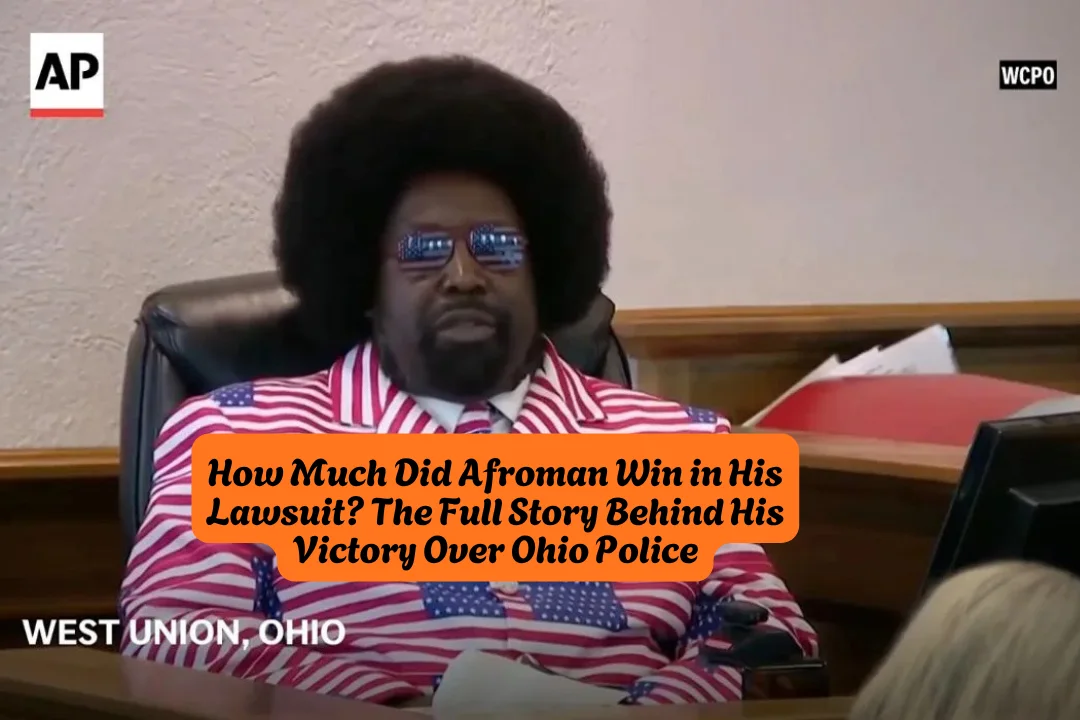
Afroman's $0 Payout Win: Unpacking the Ohio Verdict
In a legal battle that captivated audiences and ignited discussions about free speech, rapper Joseph Foreman, better known as Afroman, emerged victorious from a lawsuit filed by seven Ohio sheriff's deputies. While the initial collective claim against him hovered around a staggering $3.9 million, the Afroman Lawsuit: A Landmark First Amendment Triumph verdict delivered no financial payout to the artist. Instead, the jury’s decision, announced after a highly publicized trial, marked a profound vindication of his First Amendment rights, solidifying his ability to use satire and artistic expression to criticize public officials.
"We did it, America! Yeah, we did it! Freedom of speech! Right on! Right on!" Afroman declared outside the courthouse, encapsulating the true nature of his victory. This wasn't about money; it was about a fundamental constitutional principle. The outcome of the Afroman Lawsuit Verdict sends a clear message about the boundaries of artistic freedom and the responsibilities of those in power.
The Raid That Sparked a Satirical Firestorm
The genesis of this legal saga dates back to August 2022, when Adams County sheriff’s deputies executed a search warrant at Afroman’s Ohio home. The stated purpose of the raid was an investigation into alleged drug trafficking and kidnapping. Significantly, Afroman was not present during the raid, and perhaps even more critically, no charges were ever filed against him following the extensive search. What remained in the aftermath, however, was a traumatized household – Afroman recounted the raid's impact on his then 10 and 12-year-old children – and considerable property damage, including a broken front gate and door.
Afroman's response to what he termed a "mistake" and "their fault" was not to file a traditional complaint with a civilian oversight board. Instead, he turned to his craft: music. Utilizing footage from his own home security cameras, which meticulously captured the officers entering and searching his property, Afroman created a series of satirical music videos. These quickly went viral, racking up millions of views. Tracks like Lemon Pound Cake and Will You Help Me Repair My Door? not only entertained but also served as pointed social commentary.
In his lyrics, Afroman directly addressed the officers, questioning their actions: “Did you find what you were looking for?” and sarcastically offering: “Would you like a slice of lemon pound cake / You can take as much as you want to take / There must be a big mistake.” Beyond the humor, Afroman also leveled serious accusations, referring to the officers as “crooked cops” and alleging that $400 went missing during the raid, a claim he reiterated in court: “Police officers shouldn’t be stealing civilians’ money.” This creative and public response laid the groundwork for the ensuing legal showdown, ultimately leading to the pivotal Afroman Lawsuit Verdict.
The Deputies' Grievances: $3.9 Million and Personal Attacks
Afroman's viral musical critique did not go unnoticed by the subjects of his satire. Seven Adams County sheriff’s deputies subsequently filed a lawsuit against Joseph Foreman (Afroman), collectively seeking nearly $3.9 million in damages. Their claims were comprehensive, encompassing allegations of defamation, invasion of privacy, and the unauthorized use of their likenesses in his music videos, social media posts, and even merchandise.
The financial demands were significant, with individual deputies seeking substantial sums. Deputy Lisa Phillips, for example, sought $1.5 million, while Deputies Brian Newland and Randy Walters each claimed $1 million. During their testimony, the deputies conveyed the deep personal impact of Afroman's songs. They stated the videos ridiculed them personally and professionally. Deputy Phillips testified that one video questioned her gender and sexuality, a deeply personal attack.
Sgt. Randy Walters shared a particularly poignant account, stating that his child had been hazed at school due to Afroman’s posts and came home crying. His anguished question during testimony, “Where in the world is it OK to make something up for fun that’s damaging to others when you know for sure it’s an absolute lie?” underscored the emotional toll they claimed the satire had taken. This perspective highlighted the tension between an individual's right to free speech and the potential for perceived personal harm, a central theme in the ultimately decided Afroman Lawsuit Verdict.
A First Amendment Showdown: Afroman's Defense and the Verdict
Afroman’s legal defense was straightforward and powerful: it rested entirely on the bedrock of the First Amendment. His legal team consistently argued that his music videos were not literal accusations but rather a form of artistic expression, social commentary, and satire. This approach suggested that any reasonable audience would interpret the videos as creative works, not factual news reports. As defense lawyer David Osborne eloquently put it in his closing arguments to the jury, "No reasonable person would expect a police officer not to be [criticized]."
The Adams County jury ultimately sided with Afroman, rejecting all claims brought by the deputies. This pivotal Afroman Lawsuit Verdict, while not resulting in a financial windfall for the rapper, was celebrated as a profound constitutional victory. Afroman’s emotional reaction, proclaiming "I didn’t win — America won," underscored the broader implications of the ruling. It affirmed the right of artists and ordinary citizens to mock, criticize, and satirize public figures, including law enforcement, without fear of financially ruinous lawsuits.
The Significance of This Verdict: This case provides a crucial precedent in an age where content goes viral instantly and public figures are increasingly scrutinized. It reinforces the idea that public officials, by the nature of their roles, operate under a different standard regarding criticism than private citizens. While defamation laws exist to protect against false statements of fact, satire and parody, even when biting, are generally protected forms of speech. This verdict helps to ensure that artists can continue to use their platforms for social commentary, holding power accountable and stimulating public discourse.
Tips for Understanding Free Speech in Digital Age:
- Satire vs. Fact: The key distinction often lies in whether a reasonable person would interpret the content as a factual assertion or a humorous/critical commentary.
- Public Figures & Criticism: Public officials typically have a higher bar to prove defamation, as free criticism of government is essential for a functioning democracy.
- Know Your Rights: While Afroman used his own footage, citizens generally have the right to record police in public, though laws vary by jurisdiction. This verdict empowers artistic and critical uses of such footage.
Beyond the Payout: Understanding the True Victory
The true victory in the Afroman Lawsuit Verdict lies not in dollars and cents, but in the resounding affirmation of fundamental constitutional principles. Afroman's win is a testament to the enduring power of the First Amendment and its protection of freedom of speech, particularly when it comes to satirizing and criticizing public officials. The jury's rejection of all claims against him is a clear vindication, asserting that his musical commentary, however pointed, fell squarely within the bounds of protected artistic expression.
Had the verdict gone the other way, it could have had a chilling effect on creators, artists, and even everyday citizens who use humor, satire, or direct criticism to engage with issues of public importance, especially concerning law enforcement. It would have sent a message that powerful institutions could silence dissent through expensive litigation, regardless of the artistic merit or intent behind the criticism. Instead, this verdict strengthens the public's ability to hold institutions accountable and fosters a more robust and open societal dialogue.
Practical Takeaways for Creators and Citizens:
- Art as Advocacy: Afroman demonstrated that creative expression can be a powerful form of advocacy and a legitimate response to perceived injustices.
- The Power of Parody: This case highlights the legal protections afforded to parody and satire, even when it directly targets individuals or organizations.
- Understanding Legal Boundaries: While the verdict is a win for free speech, it's crucial for creators to understand that every legal situation is unique. Consult legal counsel if you have concerns about specific content, particularly when it involves direct allegations of fact. The distinction between protected opinion/satire and actionable false statements remains critical.
In conclusion, the Afroman Lawsuit Verdict, with its $0 payout, stands as a landmark decision that transcends monetary considerations. It is a powerful reaffirmation of First Amendment rights, underscoring the vital role of artistic expression and satire in holding power accountable. Afroman’s unconventional response to a police raid evolved into a constitutional battle, and his victory ensures that the spirit of free speech, even through provocative art, continues to thrive in America.